
Mocial
AWS EKS · Docker · Kubernetes · Codefresh CI/CD · OpenTelemetry · Canary deploys · HPA
Mocial: Monolith to Microservices Migration — EC2 to EKS with CI/CD & Full Observability
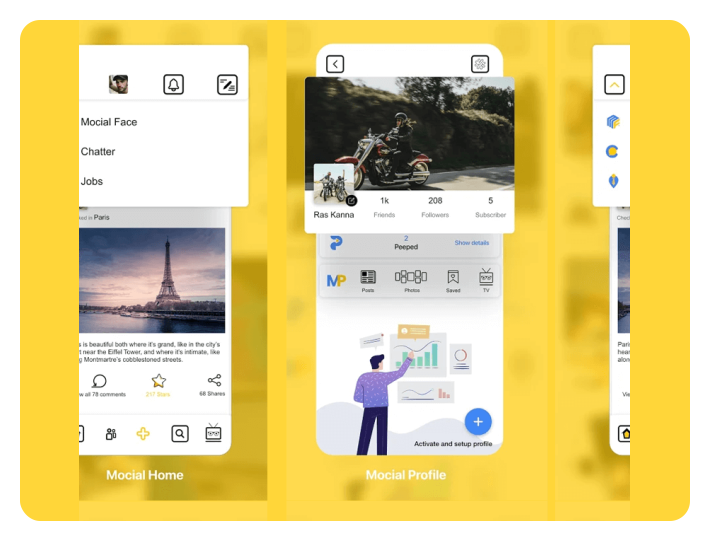
Mocial is an all-in-one social super app combining streaming, networking, and content sharing. The platform was originally built as a monolith on a single EC2 instance. When stability issues started blocking user growth, Mocial's leadership engaged Trimsel to re-architect the infrastructure, migrate to microservices on EKS, and build a CI/CD pipeline that made deployments safe, fast, and repeatable — using the same DevOps and cloud expertise we bring to every infrastructure engagement.
Talk to Our Team
OVERVIEW
From Deployment Anxiety to Shipping Multiple Times Per Week — with Confidence
Mocial's original architecture had everything on one server — frontend, backend, database, media processing. Every deployment risked the entire platform. Scaling meant upgrading to a bigger instance. No automated testing, no rollback mechanism, no visibility beyond basic CloudWatch metrics.
Trimsel was brought in to fundamentally change how the team ships code — from a high-risk, low-frequency release cycle to a safe, automated pipeline with per-service deployments, canary rollouts, and full-stack observability.
Start your project
Interested in building something similar?
Request a free consultation for your next big idea.
Client
Mocial
Industry
Social Media, Content Platform
Duration
4 Months
Platforms
Web, iOS, Android (infrastructure)
99.95%
Uptime Post-Migration
5x/week
Deployment Frequency
0
Downtime Deployments
THE CHALLENGE
A Monolith That Couldn't Scale and Deployments That Broke Things
Three compounding problems. First — every deployment risked the entire platform. A CSS change required deploying the backend too. Second — couldn't handle traffic spikes. Scaling meant bigger EC2 instance with downtime. Third — no visibility. No distributed tracing, no per-service metrics, no automated alerting. When something broke, the team was debugging blindly.

PROBLEM FACED
Deploy once a month, pray it doesn't break — and have no idea when it does
The monolith deployment process took hours and required everyone on standby. Failed deployments meant rolling back the entire application — affecting all users across all features simultaneously. The on-call rotation dreaded every release window. Growth was capped by the instance size, not the product.
Without distributed tracing, a slow API response could come from any of a dozen possible causes — database, external service, compute, network — and finding it meant combing through unstructured logs manually. Incidents that should have taken minutes to diagnose took hours.
THE SOLUTION
Microservices on EKS with CI/CD and Full-Stack Observability
Architecture Migration: Decomposed monolith into microservices on EKS with Docker, Kubernetes, HPA, and pod disruption budgets for zero-downtime rollouts. CI/CD (Codefresh): Canary deployments — 10% traffic first, validated against SLOs, then promoted or rolled back automatically. No human approval required for standard releases. Observability (OpenTelemetry): Distributed tracing, per-service SLO/SLI definitions, Grafana dashboards, PagerDuty alerting — full visibility from request to database. Infrastructure as Code (Terraform): All EKS configuration managed through Terraform, version controlled and peer-reviewed like application code.
RESULTS
99.95%
Uptime post-migration
5x/week
Deployment frequency
0
Downtime deployments
Seconds
Alert response time (was hours)
TECH STACK
START YOUR PROJECT
Want to Build Something Like This?
Every project in our portfolio started with a conversation. Tell us what problem you're solving, who it's for, and where you are today — we'll show you what's possible.
Talk to Our Experts
RELATED CASE STUDIES
Read About The Challenges We Faced And How We Helped Our Clients Achieve Their Goals.
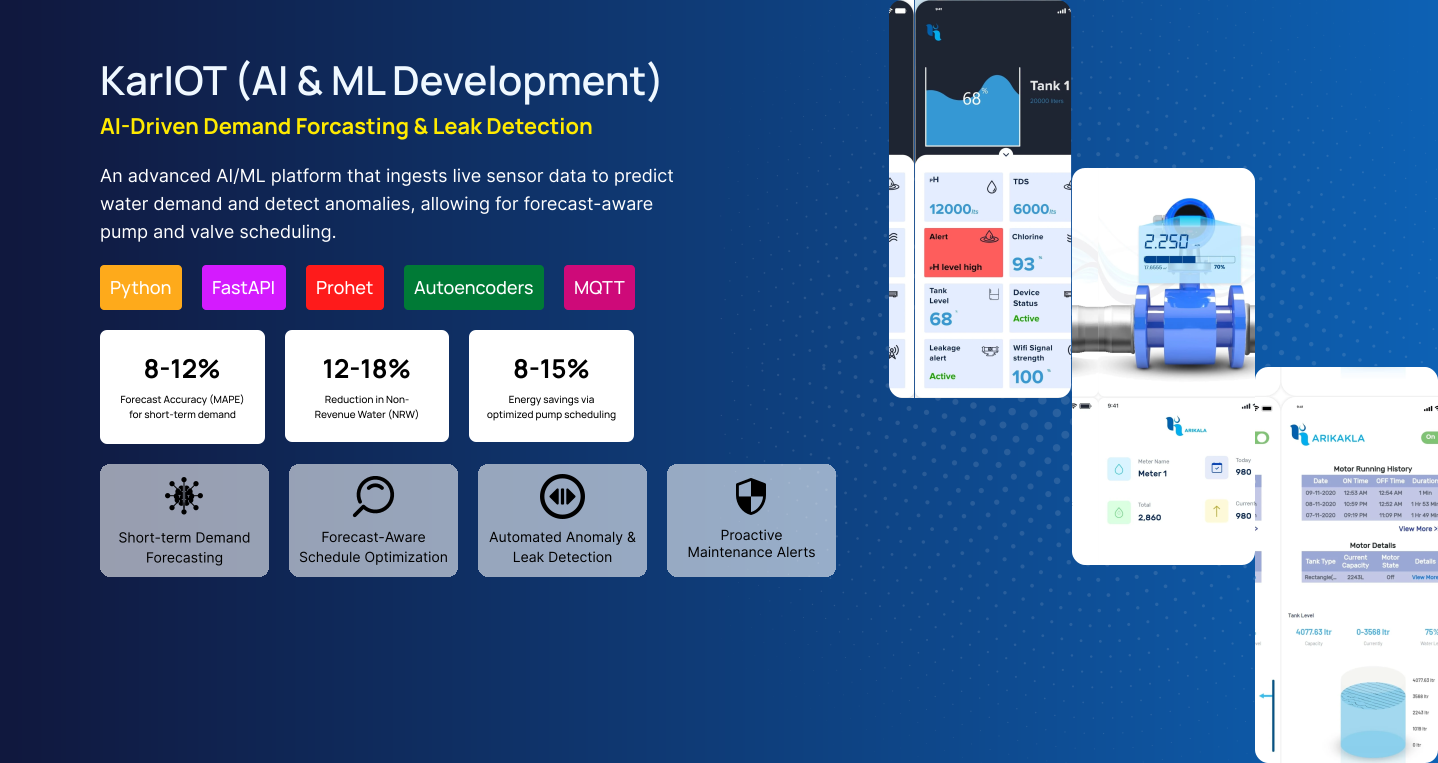
KarIoT
KarIoT is a real-time fleet management platform using IoT sensors and GPS tracking to help logistics companies optimize routes and reduce operational costs.
Read Case Study...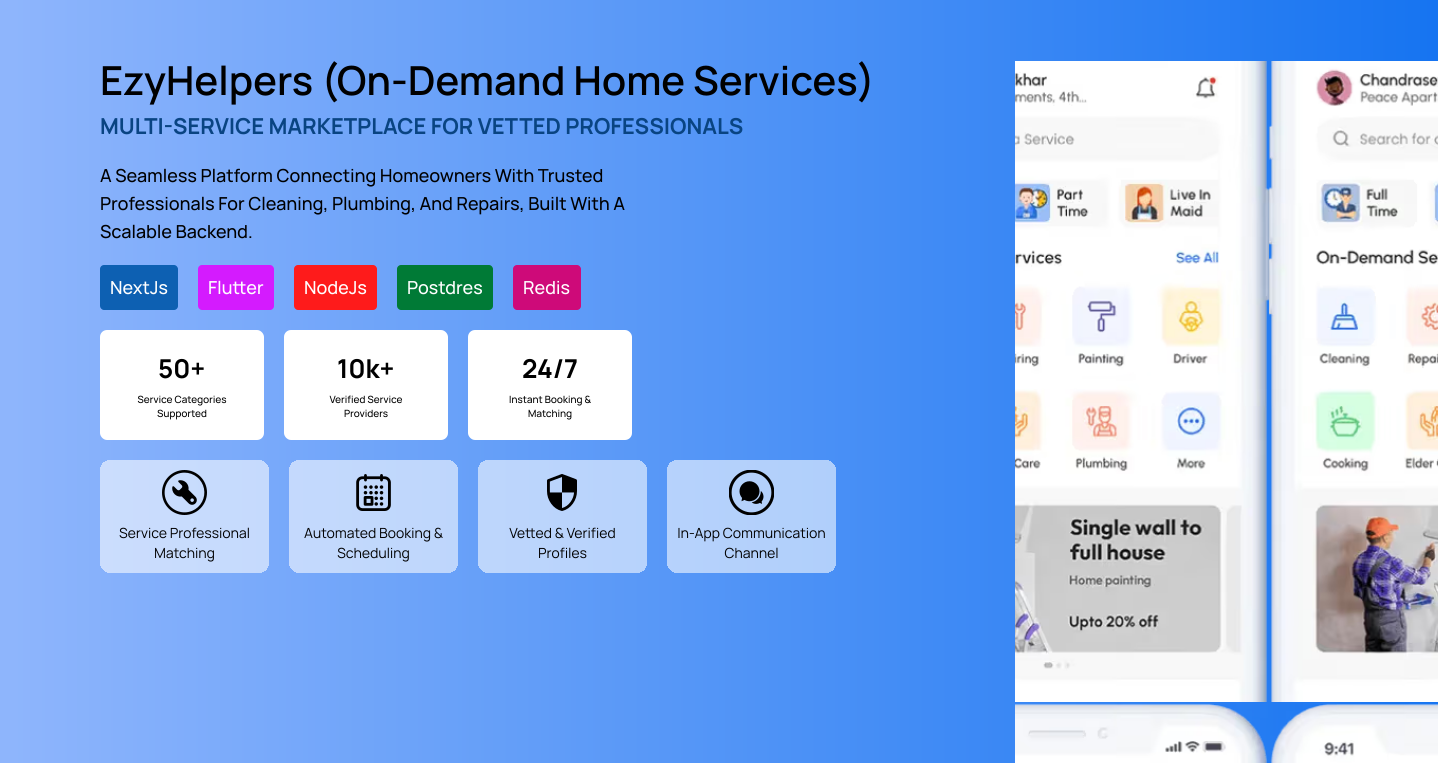
EzyHelpers
EzyHelpers is an on-demand home services platform connecting homeowners with verified professionals for cleaning, plumbing, and repairs across major Indian cities.
Read Case Study...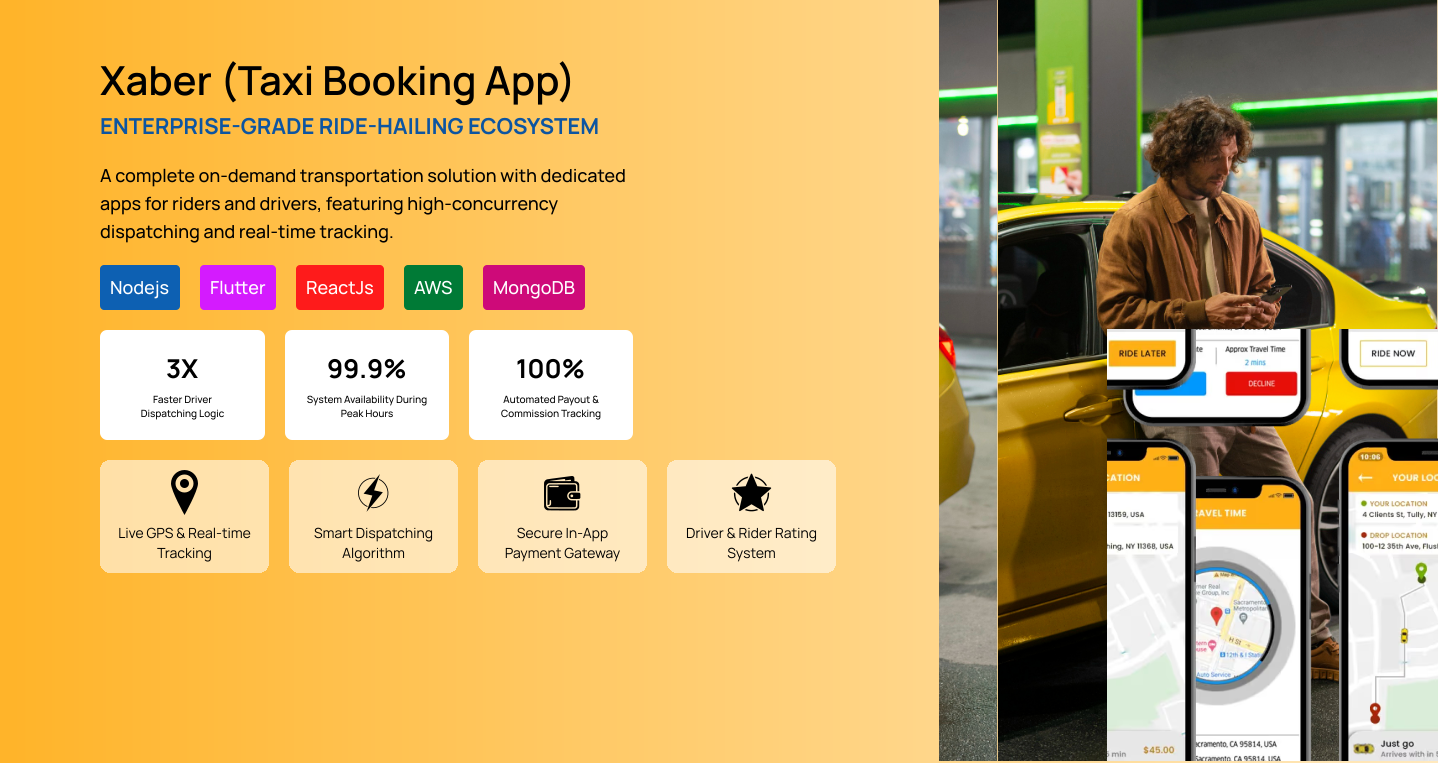
Xaber
Xaber is an Uber-style taxi booking app with real-time tracking, in-app payments, and driver management built for regional transportation markets.
Read Case Study...